
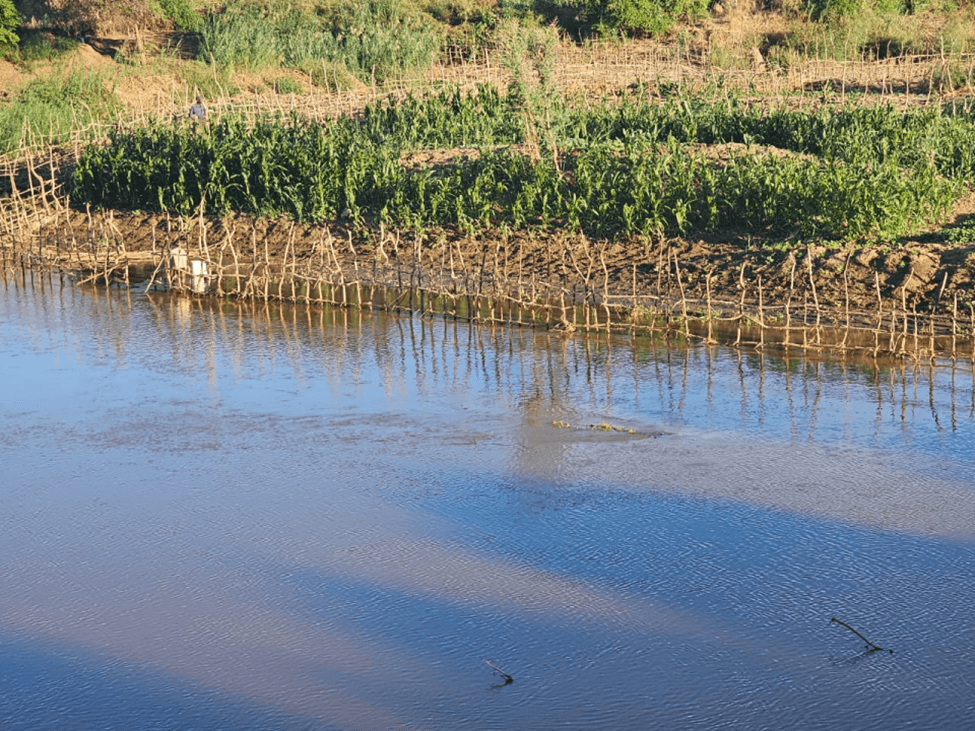
In northern Zimbabwe, small-scale farmers are turning drought into opportunity by cultivating the nutrient-rich soil along receding riverbanks.
Mbire, Zimbabwe - The Mushumbi River, once a mighty life-giver, now lies parched and listless, its waters retreating under the relentless grip of an El Niño-induced drought. In this remote corner of northern Zimbabwe, the receding river has left behind a patchwork of exposed sediment and sun-dappled pools - a natural canvas upon which the resilient small-scale farmers of Mbire have crafted an ingenious agricultural oasis.
It is along these barren riverbanks that Latinos Kamusosa and his neighbors tend to their verdant fields, their callused hands coaxing maize, vegetables and even Cassava from the nutrient-rich soil. "The streambanks are our lifeline, especially when the rains fail," says Kamusosa, his weathered face creasing into a proud smile. "This land has sustained our families for generations."
Mbire District, a region scarred by persistent food insecurity, has seen a surge in the adoption of streambank cultivation techniques by local farmers in recent years. This innovative agricultural practice has provided a critical safety net for communities grappling with the devastating impacts of the ongoing drought. According to the World Food Programme, over 60% of Zimbabwe's rural population faces acute food insecurity, with Mbire among the hardest-hit areas.
"Before we started farming the riverbanks, my family would often go hungry during the dry season," a community member recalls. "Now, we're able to harvest nutritious crops year-round, which has significantly improved our food security and resilience."
Streambank cultivation, also known as recession agriculture, involves growing crops on the nutrient-rich soil exposed along the banks of rivers and streams as water levels recede during the dry season. In Mbire, farmers have leveraged this method to cultivate a variety of crops, including maize, vegetables, and even cotton, taking advantage of the residual moisture and fertile sediments left behind by the retreating Mushumbi.
"The streambanks offer us a reliable source of water and nutrient-rich soil, even when the rains fail," explains Latinos Kamusosa, a farmer in Mbire's Ward 9 village. "This has allowed us to diversify our crops and improve food security for our families."
One of the key benefits of streambank cultivation in Mbire is its resilience to the effects of climate change. As the region experiences more frequent and severe droughts, the reliance on river-based agriculture has become increasingly important. Farmers are able to continue cultivating crops during the dry season, providing a steady source of food and income when other agricultural activities may be severely impacted.
Moreover, the practice of streambank cultivation has also helped to mitigate the impact of soil erosion and degradation, which are major challenges facing many parts of Zimbabwe. The deep-rooted crops grown on the streambanks help to stabilize the soil, reducing the risk of riverbank collapse and protecting valuable farmland.
"Streambank cultivation has become a lifeline for our community," says another community member. "We've seen a significant increase in crop yields and household incomes, as well as improved food security and nutrition among the participating families."
Despite the successes of streambank cultivation in Mbire, the practice is not without its challenges. Access to land along the riverbanks can be a source of conflict, and the risk of flooding during the rainy season remains a constant concern.