
When lawmakers turn their backs on the constitution to build private villas on protected swamps, saving our water security requires citizens to draw a definitive line in the mud.
Opinion Piece
Harare is a city under siege by its own expansion, and nowhere are the battle lines clearer than along the squelching, biologically rich grasslands of our urban wetlands. The crisis brewing over Monavale Vlei, where community groups recently launched a furious public petition to halt construction, is not just an isolated dispute between developers and birdwatchers. It is a terrifying symptom of a deeper, far more insidious governance failure.
When the very people elected to draft our laws become the ones breaking them, we no longer have a regulatory problem. We have a moral crisis.
For a capital where nearly half of all boreholes run bone-dry during the lean season, and where the municipality fails daily to provide clean, piped water, destroying our headwaters isn't just poor urban planning. It is ecological suicide.
Lawmakers as Land Grabbers, The Ultimate Betrayal
To understand the sheer scale of the public outrage surrounding Monavale Vlei, one has to look at who is holding the shovels. Earlier this month, environmental activists and legal watchdogs raised the alarm over a grotesque irony: residential stands on this strictly protected vlei were being parceled out to a group of over twenty Members of Parliament (MPs) for the construction of private homes.
The public backlash was swift and uncompromising. Led by the Combined Harare Residents Association (CHRA) and environmental advocates, citizens launched a fierce petition demanding an immediate halt to the allocation. The core of their argument cuts straight to the bone of public accountability: legislators must be the ultimate guardians of our national laws, not the primary beneficiaries of their violation.
The audacity of this move cannot be overstated. Zimbabwe holds the presidency of the Ramsar Convention on Wetlands, having assumed the chair at COP15 in Victoria Falls.
To allow our own lawmakers to pave over Monavale Vlei, one of Zimbabwe’s seven internationally recognized Ramsar sites, while holding the global gavel for wetland conservation is a diplomatic and environmental embarrassment.
While a coordinated "Whole of Government" intervention from the Ministry of Environment and the Environmental Management Agency (EMA) successfully stepped in to halt the unsanctioned work, the fact that a petition was required to stop our own MPs from digging foundations in a swamp proves that institutional greed is outpacing environmental stewardship.
The Regulatory Illusion
On paper, Zimbabwe possesses an enviable legislative framework for environmental protection. Section 73 of our Constitution explicitly guarantees every citizen the right to an environment that is not harmful to their health or well-being, mandating its protection for future generations.
Furthermore, the Environmental Management Act (EMA) [Chapter 20:27] and the National Wetlands Policy theoretically draw a strict, protective boundary around these ecologically sensitive areas.
But a critical look at the reality on the ground reveals that these laws are being treated as mere suggestions by the political elite. Consider the structural breakdown defining Harare's environmental landscape:
The 18% Enigma: According to data highlighted by the Zimbabwe Environmental Law Association (ZELA), an abysmal minority of developments taking place on our wetlands actually possess legitimate, prior Environmental Impact Assessments (EIAs).
The Institutional Blame-Game: When confronted with the MP housing scandal, Harare Mayor Jacob Mafume pointed fingers at Parliament's constitutional rank, while the Clerk of Parliament casually told aggrieved residents to "come to our offices" if they had a complaint. This buck-passing is precisely how wetlands disappear, slashed away by overlapping jurisdictions and a mutual lack of accountability.
The Missing File Syndrome: When civil society groups and affected neighbors try to inspect paperwork for urban developments, they are routinely met by regulatory authorities claiming the "relevant file is missing," cloaking corrupt allocations in bureaucratic fog.
The Hydrological Cost of Concrete
Wetlands are not just pretty meadows where rare birds like the Streaky-breasted Flufftail go to breed. For the average citizen of Harare, wetlands are a piece of free, highly efficient public infrastructure.
They are massive, natural sponges that hold back stormwaters to prevent catastrophic suburban flooding, while simultaneously trapping silt and toxic chemicals before they reach our water supply.
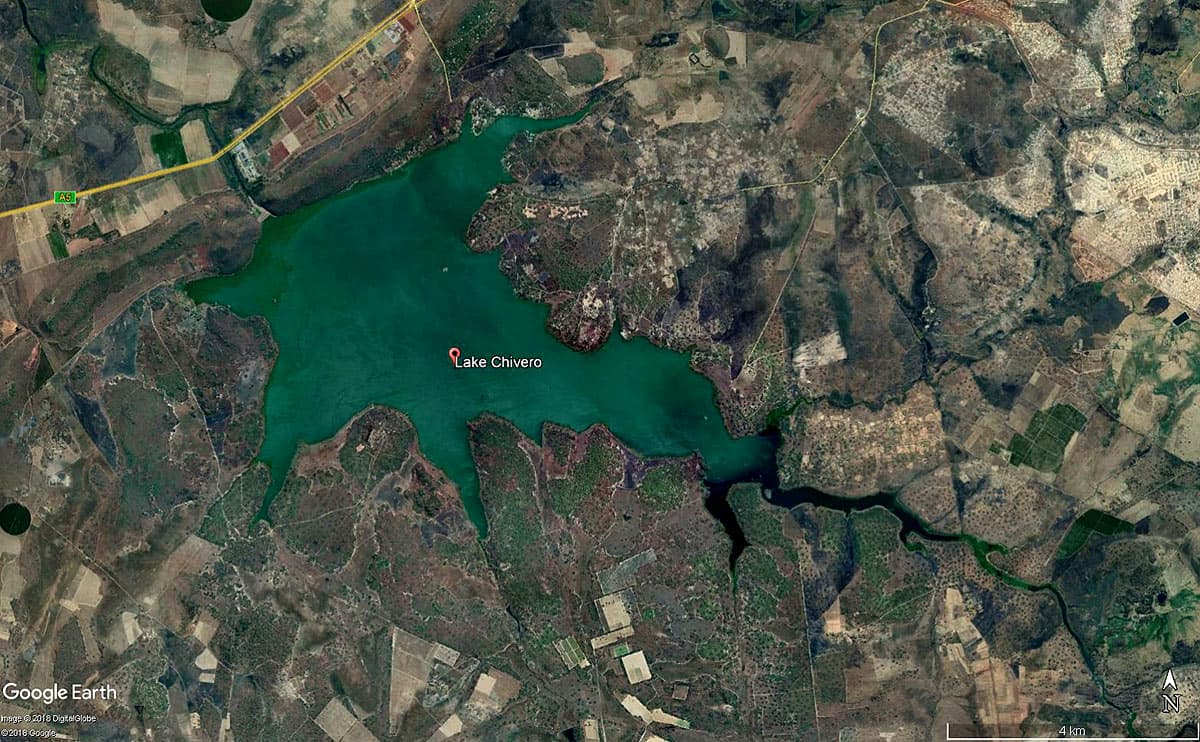
Monavale Vlei acts as the primary filter for the Marimba River, which feeds directly into Lake Chivero, the capital’s primary water reservoir. When we pave over a vlei with concrete, brick, and asphalt, we destroy the soil's porosity. Rainwater can no longer sink into the ground to recharge the city's dropping water table; instead, it turns into violent surface runoff, carrying topsoil and urban waste straight into our reservoirs.
The consequences are already slapping us in the face. Lake Chivero’s siltation levels are critical, forcing the City of Harare to spend millions of dollars every month on an expensive cocktail of chemicals to treat water that nature used to clean for free.
The Hard Truth? You cannot drink concrete. You cannot extract groundwater from a subdivision. Every cluster home or VIP villa built on a headwater vlei is a direct withdrawal from Harare's future water security.
The citizen-led petition against the MPs at Monavale Vlei was a triumphant moment for grassroots activism, forcing a frantic regulatory crackdown. But residents cannot play an eternal game of legal whack-a-mole against their own government. If the state wants to prove its commitment to environmental sustainability, it must enact immediate structural reforms:
An Absolute Moratorium: A total, unyielding freeze on all zoning changes, land allocations, and construction permits within designated wetland areas across greater Harare—with zero exemptions for government officials or MPs.
Digitized Transparency: Permanently ending the era of "missing files" by moving the National Wetlands Map and all EIA applications to a publicly accessible, online registry.
Criminal Liability for Eco-Vandalism: Amending the law so that public officials who corruptly allocate ecologically sensitive land face severe criminal prosecution, not just minor administrative reassignment.
The crisis at Monavale Vlei is a line drawn in the mud. If our nation's lawmakers cannot respect the very laws they pen in Parliament, then the citizens must continue to use petitions, protests, and courts to teach them. It is time for our leaders to decide whether they want a capital city of short-term real estate profits for the elite, or a sustainable city that can actually offer its children a glass of clean water.